

[Global Food Packaging News] With the advancement of the global "carbon neutrality" goals and the awakening of consumers' environmental awareness, green packaging has become the core trend for the transformation and upgrading of the snack industry. Environmentally friendly, degradable, and sustainable packaging solutions are highly favored by global snack brands. According to MarketPublishers.com, the global snack packaging market size will reach 27.1 billion US dollars in 2025, and is expected to rise to 48.1 billion US dollars in 2033, with a compound annual growth rate of 7.44%. Among them, the three categories of eco-friendly snack packaging, sustainable snack packaging, and bio-degradable packaging have the fastest growth rate, with a compound annual growth rate of over 15%. China, with its well-developed industrial chain advantages, core technological innovation, and strict compliance control, has become the core supplier of global environmentally friendly snack packaging. The export volume of these three categories has increased by 48%, and the products are sold far to major markets such as Europe, America, Japan, South Korea, and Southeast Asia, demonstrating strong foreign trade competitiveness.
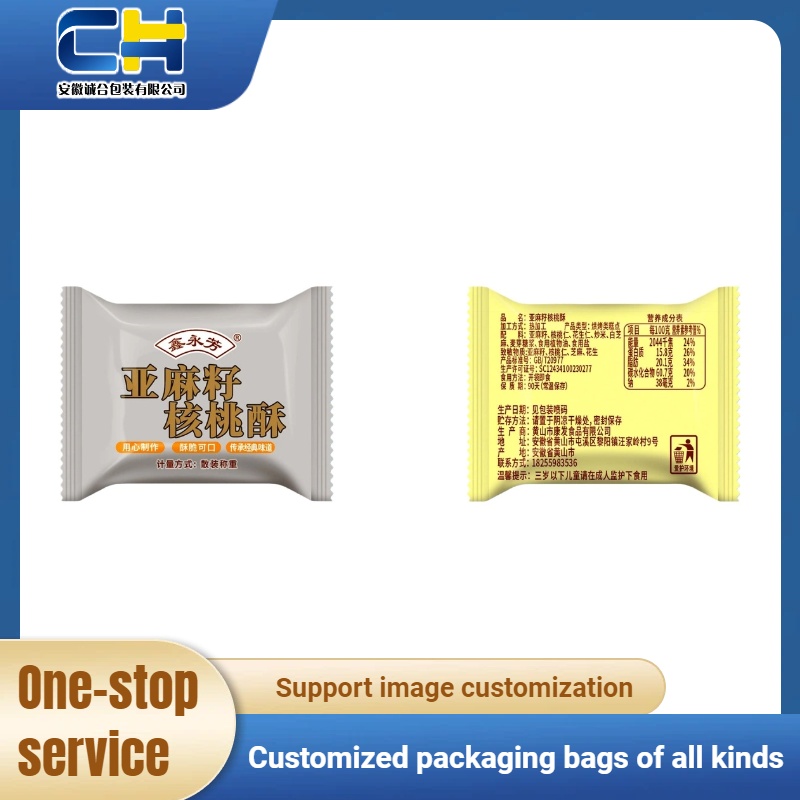
Multi-dimensional compliance certification provides support to break through global green trade barriers
The global export of snack packaging is subject to extremely strict requirements regarding environmental protection standards, food safety, and degradable performance. Especially in the current era where green trade barriers are increasingly prominent, compliance certification has become a "hard currency" for opening up international markets. Chinese enterprises have successfully broken through technical barriers by building a comprehensive compliance system that precisely adapts to the regulatory requirements of different overseas markets. They have successfully laid a solid foundation for their products to go global by ensuring that their packaging products fully comply with mainstream international standards such as EU EN 13432, US ASTM D6400, and Japanese JIS K 6953, while also obtaining ISO 9001 quality system certification, ISO 22000 food safety management system certification, and BRC food packaging material certification, ensuring that the packaging materials are safe, non-toxic, and free of harmful migration, and fully compatible with the direct contact scenarios of snacks.
Optimize certification adaptation for different target markets: Products for the North American market have all obtained BPI (Biodegradable Products Institute) certification, ensuring a biodegradation rate of over 90% within 180 days under industrial composting conditions, and also indicating the PCR (Post-Consumer Recycled Material) content to enhance the brand's environmental image; products for the European market have obtained OK COMPOST certification issued by TÜV Austria, and in addition, have obtained OK COMPOST HOME certification for home composting, which meets the requirements of the EU's Packaging and Packaging Waste Regulations (PPWR), and have also obtained GRS global recycling standard certification to meet the mandatory requirements for the content of recycled materials; products for the Japanese market have obtained the "Biodegradable Plastic" certification from JBPA (Japan Bioplastics Association), equipped with clear material labels, and adapted to the local meticulous waste classification and recycling system. Each batch of products provides complete test reports and certification documents to provide comprehensive support for overseas customers' customs clearance and market promotion.
Sustainable Snack Packaging: Enabling Green Development throughout the Entire Lifecycle
Sustainable snack packaging (sustainable snack packaging) is based on the core concept of "environmental protection throughout the entire life cycle", breaking the traditional packaging "use and then discard" predicament. From raw material procurement, production processing to recycling and reuse, it achieves a full-chain low-carbon emission reduction, becoming the core choice for global snack brands' sustainable strategies. Chinese enterprises focus on raw material innovation and process optimization, creating diversified sustainable solutions that balance environmental friendliness and practicality.
In terms of raw material selection, they prioritize the use of renewable bio-based materials such as corn starch, sugarcane residue, and bamboo pulp, replacing traditional non-degradable plastics. The bio-based content can reach up to 95%. The raw materials all pass FSC forest certification to ensure sustainable sources and no ecological damage. In terms of production processes, they adopt environmentally friendly technologies such as low-temperature blow molding and solvent-free bonding, significantly reducing energy consumption and carbon emissions. Compared to traditional production processes, energy consumption is reduced by more than 30%, and there is no VOCs (volatile organic compounds) emission, conforming to the global low-carbon production trend. At the same time, the products support recycling and reuse. Customized biodegradable recycled versions and reusable sealed versions can be provided based on different snack categories, reducing packaging waste generation and extending the shelf life of snacks, suitable for various snack categories such as nuts, dried fruits, and crispy foods. Currently, this product has entered the supply chains of international snack brands such as Nestlé and Mondelez, and the order growth rate in the European market has reached 52%, becoming a core supplier in the sustainable packaging field.
Biodegradable Packaging: Natural Degradation Solves the Problem of White Pollution
Bio degradable packaging (biodegradable packaging) is a core subcategory of environmentally friendly snack packaging. With the core advantage of "completely degradable and returning to nature after use", it effectively solves the problem of white pollution caused by traditional plastic packaging, and is suitable for high-end and healthy snack markets with extremely high environmental protection requirements. The market demand continues to explode. Chinese enterprises have achieved significant breakthroughs in degradable technology and launched bio-degradable snack packaging that combines degradation performance and packaging toughness, completely solving the industry pain point of "degradable means fragile".
The products use PLA (polylactic acid) and PBAT (polybutylene adipate terephthalate) as biodegradable composite materials. Through precise control of material ratios, a balance is achieved between degradation speed and performance - in natural environments, they can completely degrade into carbon dioxide and water without any residue. The degradation cycle can be controlled to be shortest within 90 days and longest no more than 180 days, fully meeting international degradable standards. At the same time, the packaging toughness far exceeds the industry average, with an anti-tensile strength of over 15 MPa, resistant to punctures, leakage prevention, and capable of effectively blocking oxygen and moisture, extending the shelf life of snacks. It is suitable for snacks that are prone to moisture and oxidation, such as fried snacks, candies, and freeze-dried foods. In addition, edible biobased film packaging has been launched, made from food-grade raw materials such as potato starch and fruit and vegetable juices, which can be directly consumed, achieving an innovative breakthrough of "packaging as food ingredient", suitable for scenarios such as instant noodle seasoning packets and small snacks. It has now been exported to Asian markets such as Japan and South Korea, with orders increasing by 58%. Relying on a mature production system, it can achieve rapid response from design to mass production, support customized sizes, thicknesses, and printing schemes, and meet the individualized needs of different customers.
Eco-Friendly Snack Packaging: Versatile Adaptation to Activate the Global Market
Eco-friendly snack packaging is positioned with the core values of "environmental friendliness, practicality and high cost-effectiveness", covering two core series of sustainable and biodegradable products, forming a diversified product matrix. It meets the export demands of snacks of different price ranges and categories, covering both the global mid-to-high-end and mass markets, and has become the core growth pole of China's eco-friendly packaging exports. According to the market demands of different regions, it is customized and optimized to precisely adapt to local consumption habits and regulatory requirements.
For the European and American market, the focus is on environmental design and brand positioning. Simple and elegant biodegradable packaging bags and reusable eco-friendly paper cans are launched, along with environmentally friendly ink printing, highlighting the brand's green concept and aligning with the environmental consumption habits of European and American consumers. For the Southeast Asian market, the product cost-effectiveness is optimized, and economical biodegradable snack bags are launched. While ensuring environmental performance, the production cost is reduced, meeting the needs of the local mass snack market. At the same time, the heat resistance and moisture resistance are enhanced to adapt to tropical climates. For the Japanese and Korean markets, focused design is carried out, launching small-sized and portable eco-friendly snack packaging, adapting to single-portion and portable snack trends. At the same time, the combination of packaging appearance level and practicality is emphasized to enhance the product's market competitiveness. Relying on a complete foreign trade service system, Chinese enterprises have established overseas warehousing and service centers in Germany, the United States, and Singapore. Commonly used product specifications are delivered locally within 72 hours, and the delivery cycle of customized products is controlled within 15 days. At the same time, multi-language design and after-sales consultation services are provided to assist customers in completing customs clearance, certification, and filing procedures, reducing the procurement threshold.
Accelerating global expansion and creating new advantages in foreign trade services
With the continuous deepening of global environmental protection trends, Chinese environmental-friendly snack packaging enterprises have been continuously increasing their research and development investment, focusing on technological innovation and product upgrading, to promote the development of environmentally friendly packaging towards "more environmentally friendly, more practical, and more intelligent" directions - mainly developing degradable antibacterial packaging and intelligent environmental-friendly packaging. By adding natural antibacterial components, the packaging antibacterial performance is enhanced, and the shelf life of snacks is extended; integrating intelligent sensing technology, real-time monitoring of snack freshness is achieved, further enhancing the product value. At the same time, they are continuously expanding the global market, focusing on emerging markets such as Latin America and the Middle East, relying on the "Belt and Road" initiative and cross-border e-commerce platforms, to expand export channels and enhance the global influence of Chinese environmental-friendly snack packaging.
A foreign trade enterprise manager stated that by 2025, the export volume of sustainable snack packaging, biodegradable packaging, and environmentally friendly snack packaging will account for 92%, among which the European market will account for 40%, the North American market 35%, the Southeast Asian market 18%, and the orders from international renowned snack brands will exceed 60%. In the future, they will continue to deepen academic-industry-research cooperation, overcome technical bottlenecks such as the cost control of degradable materials and continuous production, promote the large-scale and high-end development of environmentally friendly packaging, and at the same time improve the global service network to provide one-stop environmentally friendly packaging solutions for overseas customers, helping the global snack industry achieve green transformation and upgrading.
Industry Outlook: Green Innovation Drives Global Snack Packaging Transformation
Industry experts have pointed out that the global snack packaging market is accelerating its transformation towards greening, sustainability, and functionality. Environmental compliance, degradable performance, and low-carbon throughout the entire life cycle will become the core competitive points. At the same time, innovative categories such as intelligent packaging and edible packaging will become new growth poles. Chinese enterprises, leveraging their complete industrial chain advantages, core technology accumulation, and rapid innovation capabilities, are expected to increase their global market share of environmentally friendly snack packaging to over 50% within the next 3-5 years. Through continuous optimization of product performance, improvement of compliance systems, and establishment of a global service network, Chinese environmentally friendly snack packaging will transform from a "cost-effective supplier" to a "high-end brand leader", breaking the monopoly of international brands and promoting the global food packaging industry to develop in a more green and sustainable direction with high quality.


